What Is Reverse Logistics?
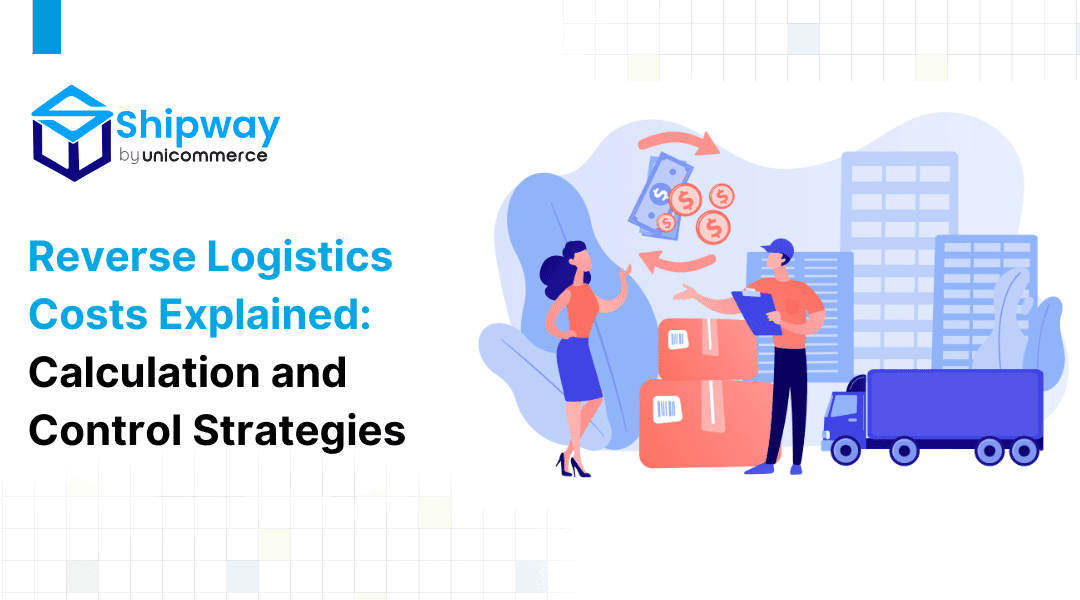
Every time a customer clicks “Request Return,” a chain of events begins inside your business. A courier gets dispatched. The product needs inspecting. Someone decides whether it gets restocked, refurbished, or written off. A refund gets processed. All of this costs money, time, and effort. This entire process is what we call reverse logistics.
The reverse logistics meaning in ecommerce refers to all supply chain activities involved in moving a product from the end customer back to the seller, manufacturer, or warehouse. It covers returns management, product inspection, restocking, refurbishment, recycling, and disposal. While forward logistics focuses on getting products into customers’ hands, e-commerce reverse logistics manages everything that comes back. And in ecommerce today, quite a lot comes back.
Why Reverse Logistics Costs Are Draining Your Margins?
Most ecommerce brands track their forward shipping costs with great care. They negotiate rates, compare carriers, and optimize packaging weights. But when it comes to reverse logistics costs, that same level of scrutiny rarely exists. The result is a slow, invisible margin drain that compounds with every return.
In the US market alone, retailers lose over USD 100 billion annually due to return-related costs, and the structural problem is identical for Indian D2C brands scaling through ecommerce returns logistics.
The challenge compounds because reverse logistics operates with far less efficiency than forward logistics. Returns arrive unpredictably, in varying conditions, from different locations, each demanding individual attention. A clunky return process does not just cost you money on that transaction. It costs you, the customer permanently.
The 6 Key Components of Reverse Logistics Costs
Effective logistics cost management starts with knowing exactly where your money is going. Here are the six main cost buckets every ecommerce brand needs to track.
1. Return shipping costs
The most visible cost in ecommerce returns logistics. In India, reverse pick-up rates typically run slightly higher than forward delivery rates due to scheduling complexity and lower load density on return routes.
2. Inspection and quality check costs
Once a product arrives at the warehouse, someone must assess its condition. Is it sellable? Does it need repair? Is it damaged beyond recovery? This step involves labor time, and at high volumes, it adds up quickly. Shipway offers QC options at the pick-up stage itself, reducing the workload at the warehouse end.
3. Restocking and repackaging costs
Products passing inspection need repackaging and inventory system updates before going back on the shelf. This involves packaging material costs and labor for repacking each unit.
4. Refund and refurbishment costs
Cash refunds, gift card issuances, and store credit processing all carry transaction costs. Products needing minor repair before resale add further expense that many brands do not track separately.
5. Warehousing and storage costs
Returned products need space while being processed. Reverse logistics management typically requires up to 20% more storage space than forward logistics operations. That additional space translates into real warehousing costs every single month.
6. Write-off and disposal costs
Some products cannot be resold. Writing them off is a direct loss, and the disposal or recycling process often carries its own cost on top.
How to Calculate Your Reverse Logistics Costs
You cannot control what you do not measure. Here is the step-by-step formula every ecommerce brand should be using for logistics cost management, along with a worked example using real Indian ecommerce numbers.
The formula
Total Reverse Logistics Cost Per Return = Return Shipping + Inspection Labor + Restocking and Repackaging + Refund Processing + Warehousing Allocation + (Write-Off Value × Write-Off Rate)
Your RLCR (Reverse Logistics Cost Rate)
RLCR = (Total Monthly Reverse Logistics Cost ÷ Total Monthly Revenue) × 100
Worked example – 500 returns per month, D2C apparel brand
Cost component |
Per return |
Monthly total |
Return shipping (avg.) |
₹80 |
₹40,000 |
Inspection labor (10 min at ₹150/hr) |
₹25 |
₹12,500 |
Repackaging material and labor |
₹30 |
₹15,000 |
Refund processing (gateway + ops) |
₹20 |
₹10,000 |
Warehousing allocation per return |
₹15 |
₹7,500 |
Write-offs (10% unsellable at avg. ₹500) |
₹50 |
₹25,000 |
Total |
₹220 per return |
₹1,10,000/month |
At 500 returns per month on an average order value of ₹800, that ₹1,10,000 represents approximately 27.5% of the revenue those 500 orders originally generated. That is a significant leak from any business’s P&L and a clear case for tighter reverse logistics cost tracking.
What Hidden Costs Are You Missing in Reverse Logistics?
Beyond the six components above, there are costs that never appear on any line item but absolutely show up on your P&L over time. These are the hidden drains of poor ecommerce returns logistics management.
-
Customer lifetime value loss:
A poorly handled return does not just cost you that shipping fee. It costs you the customer’s future orders entirely.
-
Inventory opportunity cost:
Every day a returned product sits in the inspection queue is a day it cannot be resold.
-
Return fraud:
Customers returning used or different products create write-off costs that are extremely hard to track without proper QC systems in your reverse logistics management process.
-
Customer support load:
Every return generates queries, status checks, and refund follow-ups that are a real cost rarely attributed to reverse logistics.
What Are the Benefits of Effective Reverse Logistics?
Strong reverse logistics management is not just about cutting costs. The benefits of reverse logistics extend across customer loyalty, revenue recovery, product intelligence, and brand reputation.
-
Better customer retention:
Easy returns drive repeat purchases. Over 90% of customers say they buy again from brands with smooth return experiences. This is one of the strongest commercial benefits of reverse logistics for D2C brands.
-
Faster inventory recovery:
Streamlined returns get sellable stock back on the shelf sooner, reducing missed sales and improving cash flow.
-
Smarter product decisions:
Return data showing why products come back is some of the most cost-effective market research available to you.
-
Sustainability and brand trust:
Brands managing e-commerce reverse logistics responsibly through recycling and refurbishment programs build stronger reputations with conscious consumers.
-
Competitive differentiation:
Brands with genuinely smooth, fast, transparent return experiences stand out clearly in a crowded market.
What Is Reverse Logistics in Supply Chain Management?
For brands that are scaling, reverse logistics in supply chain management is no longer a back-office function. It is a strategic layer of your entire fulfilment operation that deserves the same attention as your forward supply chain. Monitoring software supply chain news provides insights into how modern tracking systems can reduce the administrative burden of handling returns.
In supply chain reverse logistics, the key is integration. When your returns data flows seamlessly into your inventory management system, you get real-time visibility into how many units are in transit, under inspection, or back in sellable stock. This visibility reduces buffer stock requirements, improves demand forecasting, and helps you avoid over-ordering products that have chronic return problems.
The most forward-thinking Indian D2C brands are now building their reverse logistics in supply chain management with the same rigor they apply to forward fulfilment. That means dedicated return handling SOPs, SLA-backed courier partnerships for reverse pick-ups, and automated disposition rules that decide the fate of each returned product instantly.
How to Reduce Reverse Logistics Costs with 7 Proven Strategies
Good reverse logistics management is built on deliberate decisions, not reactive fixes. Here are seven strategies that consistently deliver results for ecommerce and D2C brands managing e-commerce reverse logistics at scale.
1. Audit your return reasons first
Analyze why products come back. Is it sizing? Product description mismatch? Damage in transit? Each root cause has a different fix. Fixing it upstream reduces return volume, the single most powerful logistics cost management lever available to any ecommerce brand.
2. Tighten your return policy without hurting experience
Set category-specific return windows, require photo proof of damage, and exclude non-returnable items. Shipway lets you configure different policies per product category automatically in one dashboard.
3. Deploy quality checks at pick-up
When your logistics partner does QC at the time of reverse pick-up, ineligible returns get rejected at the door before incurring any warehouse cost. This is one of the most underused tools in ecommerce returns logistics today.
4. Shift refunds toward exchanges and store credit
Every refund is a revenue loss. Every exchange or store credit redemption retains revenue. Using an exchange-first return flow, some merchants retain up to 30% of revenue that would otherwise be lost to refunds.
5. Centralize your return processing
Routing returns to one central facility consolidates inspection labor, QC equipment, and disposition decisions, creating efficiency gains that scale well as your e-commerce reverse logistics volumes grow over time.
6. Negotiate better reverse logistics rates
Higher return volumes create stronger bargaining power with 3PLs and aggregators. Bundling reverse pick-up scheduling with your forward shipping volume can unlock better rates and significantly reduce administrative overhead in your supply chain reverse logistics operations.
7. Use return analytics to drive product improvements
Build a regular review cadence for return data by SKU, category, and reason code. Products with disproportionately high return rates are usually signaling something fixable. Fix it upstream and your reverse logistics costs drop organically without any additional operational spend.
How Shipway Helps Reduce Reverse Logistics Costs
In reverse logistics in supply chain management, inefficient return handling often leads to delays, higher operational effort, and rising costs. Many businesses understand the reverse logistics meaning at a high level, but struggle to optimize it in practice. Shipway helps streamline this process by introducing automation, centralized control, and real-time visibility across return operations.
-
Self-Service Return Management
Shipway enables customers to initiate return or exchange requests through a self-service portal. This simplifies e-commerce reverse logistics by reducing dependency on support teams and eliminating manual coordination through emails or calls.
-
Centralized Return Control
All return requests can be managed from a single dashboard where businesses can review, approve, or reject them. This improves efficiency in reverse logistics management and ensures faster decision-making.
-
Automated Reverse Pickup Scheduling
Shipway integrates with multiple courier partners to automate reverse pickup scheduling. This improves efficiency in supply chain reverse logistics by reducing manual effort and ensuring quicker, more reliable return pickups.
-
Real-Time Return Tracking
The platform offers end-to-end tracking of return shipments, giving businesses complete visibility into return status. Automated customer notifications also keep buyers informed, reducing support queries.
-
Return Product Segregation
Returned products can be categorized based on their condition such as sellable, damaged, or requiring refurbishment. This helps in better inventory handling and reduces losses from improperly managed returns.
-
Faster Refunds and Exchanges
Shipway supports quick refund processing and seamless exchange workflows. Faster resolution improves customer experience and shortens the return cycle, which helps control operational costs.
-
NDR Management and RTO Reduction
Shipway helps manage failed delivery attempts through automated follow-ups and reattempts. This proactive approach reduces Return to Origin rates, a major cost driver in reverse logistics in supply chain management.
-
Improved Visibility and Control
With access to return data and performance insights, businesses can identify inefficiencies, track trends, and make better decisions to optimize reverse logistics operations over time.
What does reverse logistics mean in ecommerce?
Reverse logistics in ecommerce refers to the process of managing product returns from the customer back to the seller or warehouse. It includes return pick-up coordination, product inspection, restocking or refurbishment, and refund or exchange processing.
How much do reverse logistics costs typically add to product expenses?
For ecommerce businesses, reverse logistics typically adds between 7% and 11% to the cost of a returned product. In high-return categories like apparel and footwear, the true cost, including hidden factors, can be considerably higher.
What is the average ecommerce return rate in India?
Average ecommerce return rates in India range from 20% to 30% for most product categories, with apparel and footwear on the higher end. During peak sale events, return rates can climb further due to impulse buying and gifting patterns.
How can I reduce my ecommerce reverse logistics costs quickly?
The fastest wins come from improving product descriptions and images to reduce misalignment returns, implementing an automated returns platform to cut manual processing costs, and shifting customers toward exchanges and store credits instead of full refunds.
What is the difference between reverse logistics and forward logistics?
Forward logistics covers the journey from the manufacturer or warehouse to the end customer. Reverse logistics covers the journey back. Both are essential, but reverse logistics is generally more expensive per unit because of its unpredictable, high-variability, and low-density nature.