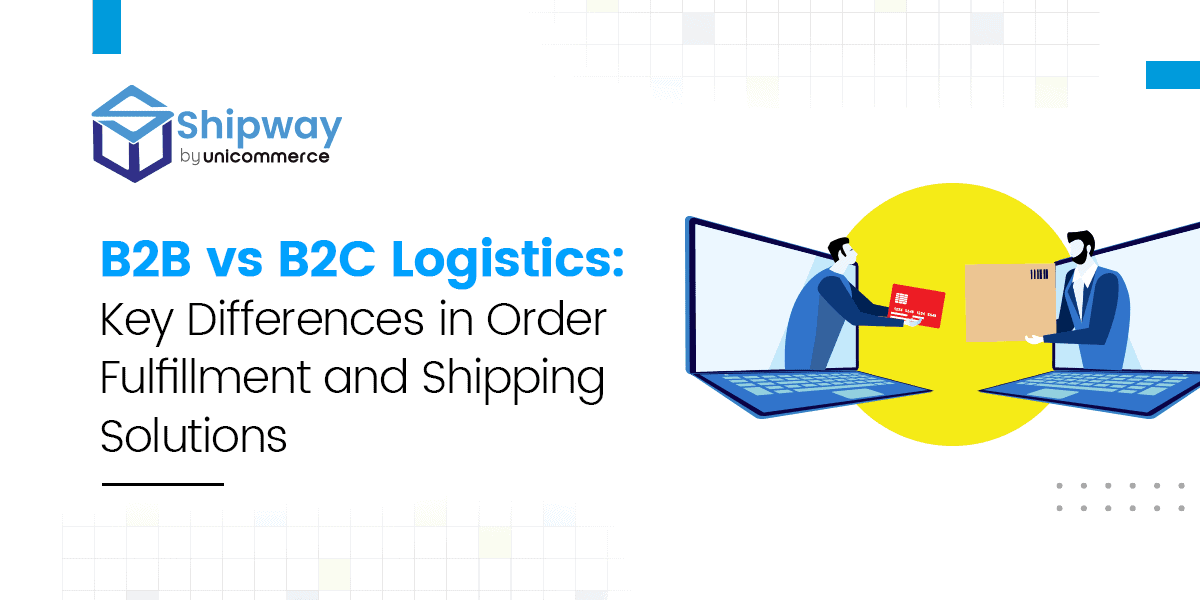
Logistics is the backbone of every supply chain, moving products seamlessly from sellers to their final destination. Within this system, two models operate very differently: B2B and B2C logistics.B2B logistics deals with bulk shipments, scheduled deliveries, and long-term business partnerships, whereas B2C logistics focuses on fast, doorstep delivery and meeting individual customer expectations.
Understanding B2B vs B2C logistics helps businesses choose the right approach for their order patterns, delivery needs, and customer expectations, leading to smoother operations, lower costs, and better overall fulfillment performance.
In this blog, we’ll break down what B2B and B2C logistics really mean, how they differ, their key characteristics, and why picking the right logistics model can significantly strengthen your entire supply chain.
What is B2B Logistics?
B2B logistics, or business-to-business logistics, focuses on the transportation, storage, and distribution of goods between businesses. Unlike B2C logistics, the customers in B2B logistics are other companies rather than individual consumers.
Key Characteristics of B2B Logistics:
1. Large Volumes:
B2B logistics handles bulk shipments for manufacturers, wholesalers, and retailers. Orders follow planned schedules, making accuracy in procurement, packaging, and transportation essential to prevent delays or supply issues.
2. Complex Operations:
B2B supply chains involve multiple stakeholders suppliers, factories, distributors, and service partners requiring strict coordination, documentation, and compliance. Any small bottleneck can disrupt the entire supply chain.
3. Specialized Equipment:
Bulk B2B shipments need specialized equipment like pallets, forklifts, crates, and industrial-grade containers to handle large quantities safely. Standardized packaging, proper handling systems, and well-equipped warehouses ensure smooth loading, unloading, and storage without product damage.
4. High Reliability & Predictability:
B2B logistics demands consistent, on-time deliveries because businesses run on fixed production and distribution schedules. Any delay or inaccuracy can halt manufacturing, disrupt supply chains, or cause stockouts, making reliability and predictability essential.
5. Relationship-Driven Processes:
Unlike B2C, B2B logistics is built on long-term partnerships involving negotiated pricing, customized SLAs, and ongoing collaboration. Strong relationships and trust are key to maintaining smooth, efficient, and scalable supply chain operations.
What is B2C Logistics?
B2C logistics, or business-to-customer logistics, revolves around delivering products directly to individual customers. It is a core part of eCommerce operations, emphasizing speed, convenience, and last-mile delivery efficiency.
Key Characteristics of B2C Logistics
1. Individual Orders:
B2C logistics focuses on delivering products directly to individual consumers. Orders are usually placed in small quantities, sometimes even a single item and require careful handling, accurate packaging, and proper tracking. Unlike bulk business shipments, each B2C order is unique and must be processed separately, which increases the need for efficient warehouse operations and order management.
2. Speed & Convenience:
Modern consumers expect fast and flexible delivery options. Whether it’s same-day, next-day, or 2–3 day shipping, timely fulfillment plays a major role in customer satisfaction. B2C logistics companies must maintain strong inventory accuracy, optimized routing, and reliable warehousing to meet these expectations consistently. Slow or delayed delivery can quickly lead to negative reviews and customer loss.
3. Last-Mile Delivery Focus:
The last mile getting a package from the distribution center to the customer’s doorstep is the most critical phase in B2C logistics. It requires efficient route planning, trained delivery partners, and real-time tracking to ensure smooth and safe delivery. Since customers prefer convenient options such as doorstep drop-offs, contactless delivery, and precise time slots, last-mile optimization becomes essential for a seamless buying experience.
Differences Between B2B and B2C Logistics
| Feature | B2B Logistics | B2C Logistics |
| Customer Base | Serves businesses, distributors, and retailers | Serves individual consumers |
| Order Volume | Large bulk shipments | Smaller, individual orders |
| Complexity | Involves multiple parties and stages | Direct delivery, simpler operations |
| Delivery Speed | Longer lead times due to bulk processing | Fast, last-mile delivery is critical |
| Packaging | Bulk packaging (cartons, pallets) | Individual packaging for single units |
| Pricing | Calculated often by volumetric weight | Standard pricing based on product size/weight |
Why Understanding the Difference Matters?
Choosing the right logistics model is essential for any business aiming to streamline operations and stay competitive. Whether you’re serving other businesses or end consumers, understanding how B2B and B2C logistics differ helps you optimize costs, delivery performance, and overall supply chain strategy.
1. Cost Efficiency:
B2B logistics reduces per-unit shipping costs through bulk trucking, consolidated cargo, and freight forwarding. In contrast, B2C logistics requires strong last-mile networks and fast delivery options, making it more expensive. Choosing the right model helps businesses optimize operational costs and improve profitability.
2. Customer Experience:
B2C logistics prioritizes fast delivery, real-time tracking, and easy returns to maintain customer satisfaction. B2B logistics focuses on accuracy, predictable schedules, and meeting contractual commitments to ensure smooth supply chain operations.
3. Scalability:
B2B logistics scales through bulk procurement, warehouse capacity, and predictable high-volume shipping. B2C logistics scales by expanding delivery reach, improving last-mile efficiency, and enhancing order-processing systems. Understanding these needs helps businesses invest in the right logistics partners and technology.
What Are the Major Challenges in B2B Logistics?
While B2B logistics offers efficiency and scale, it also comes with several operational challenges that businesses must address to maintain smooth supply chain performance.
1. Order Tracking
B2B shipments often involve bulk orders, multiple checkpoints, and complex delivery routes. Without advanced tracking systems, delays can go unnoticed, impacting production schedules and business commitments. Real-time visibility is essential so partners can plan inventory, staffing, and downstream processes accurately.
2. Cost Efficiency
Bulk shipments may seem cost-effective, but factors like multi-modal transport, international freight, rising fuel expenses, and fleet maintenance can significantly drive up costs. Logistics providers must constantly balance cost optimization with service quality, especially for long-distance or cross-border shipments.
3. Customer Support
In B2B logistics, customer relationships are long-term and contract-driven. Inefficient support such as delayed responses, poor updates, or lack of issue resolution can damage trust and result in lost business. Consistent communication and proactive support are crucial to maintaining strong partnerships.
4. Route Planning
Inefficient route planning can cause delivery delays, increased fuel usage, and higher operational costs. For B2B shipments that operate on fixed schedules and tight timelines, optimized routing is essential to avoid disruptions across the supply chain.
To overcome these challenges, businesses are increasingly adopting modern logistics technologies. AI-powered route optimization, automated shipping workflows, real-time order tracking, and integrated warehouse management systems help streamline operations, reduce costs, and enhance delivery accuracy.
The Bottom Line: Smarter Logistics Decisions Drive Better Business Outcomes
Both B2B logistics and B2C logistics are essential components of the supply chain, but they serve distinct needs. B2B logistics focuses on bulk shipments, long-term business partnerships, and operational efficiency, while B2C logistics prioritizes speed, convenience, and individual customer satisfaction.
For businesses looking to optimize their supply chain with reliable partners, exploring the top B2B logistics companies in India is a smart first step. Partnering with the right logistics provider ensures smooth bulk shipments, scalable operations, and enhanced customer experiences across the board.