
Online shopping and the expansion of international trade are driving rapid growth in cross-border parcel logistics, pushing the international express delivery market from USD 72.50 billion in 2026 to USD 138.44 billion by 2034, clearly showing that faster shipping is now a business necessity. For firms shipping abroad, speed, dependability, and global reach are now essential due to rising expectations.
To support this, Express Mail Service (EMS) operates through a global postal network with features like:
- Time-bound international delivery
- Transparent pricing
- End-to-end shipment tracking
Why it matters to brands:
EMS offers a useful alternative to high-end courier services by bridging affordability and quick delivery, given the expansion of global commerce, online shopping, and the need for international documentation.
Let’s understand what express mail service EMS is, how it works, the countries it serves, and how to trace parcels with confidence. Additionally, by reading this blog, which covers all the key aspects, you can decide whether this is the best option for your international shipping needs.
So, let’s dive in!
What is EMS Shipping (Express Mail Service)?
EMS (Express Mail Service) is an international postal shipping service designed for fast and time-bound delivery of documents, parcels, and merchandise across multiple countries. It is a global express delivery service operated through national postal authorities under the Universal Postal Union (UPU), ensuring standardized service and worldwide reach.
Key Highlights:
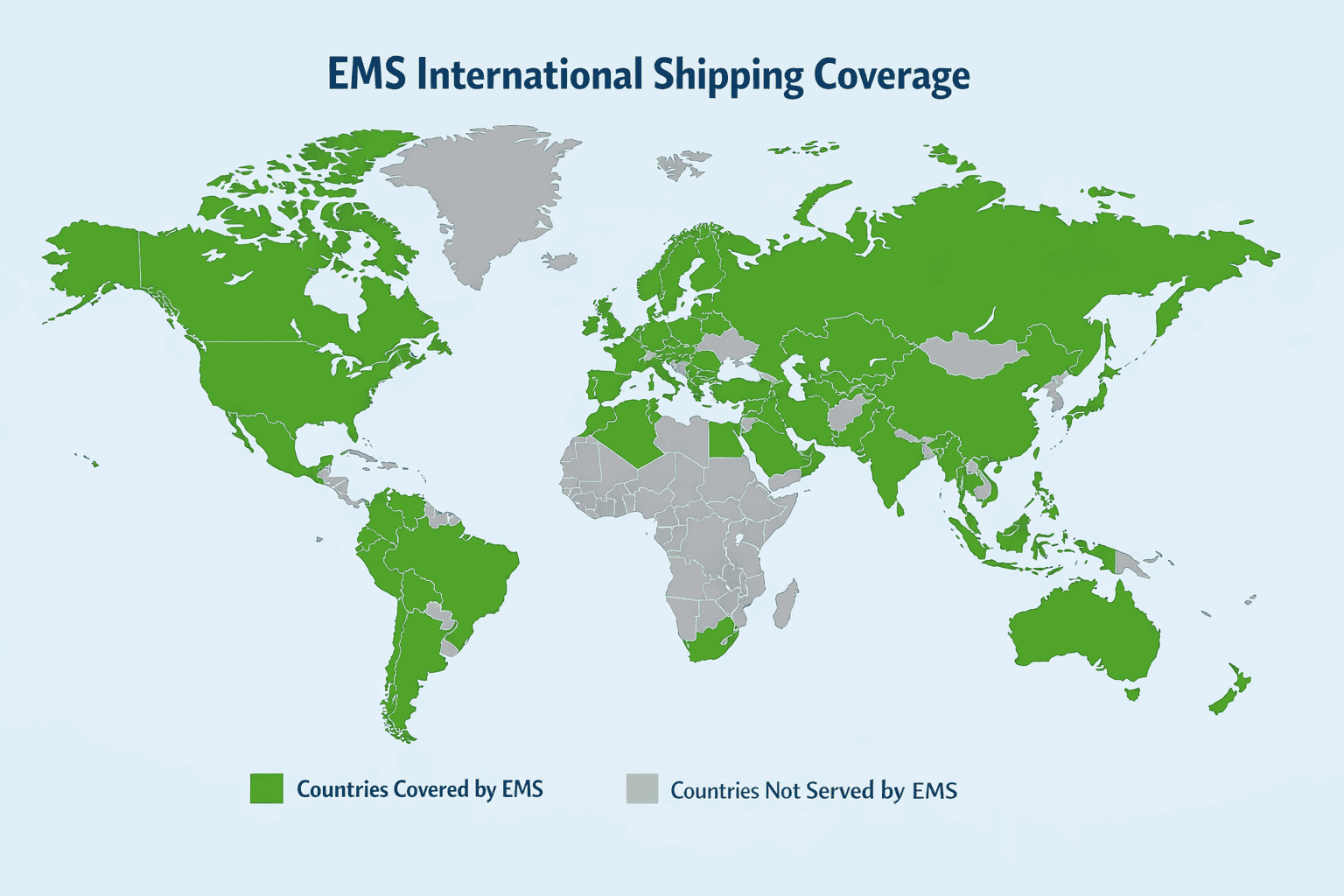
- EMS operates in over 170 countries and territories worldwide.
- It covers most major regions worldwide, making it one of the largest international express delivery networks.
- It provides priority mail service with end-to-end tracking from pickup to final delivery.
Key Features of EMS for International Shipping
- Priority handling: Shipments are processed faster than regular international postal mail.
- Global last-mile coverage: By leveraging national postal networks, it can deliver to remote and hard-to-reach locations that private couriers may have limited access to.
- Wide service availability: Services are accessible through post office counters worldwide.
- End-to-end tracking: Shipments can be tracked throughout the journey via a unified EMS tracking system.
How EMS Works for Cross-Border Shipping?
When you ship a parcel abroad, the real challenge starts after it leaves your country. EMS simplifies this entire journey by routing your shipment through a trusted global postal network that manages cross-border movement and last-mile delivery.
Here’s how EMS transports your package:
- Booking the Shipment: Your journey begins when you either arrange a pickup or drop off your parcel at an authorized post office that offers international services.
- Parcel Handling & Dispatch Prep: After acceptance, the shipment is logged into the postal system, security-checked, and organized for outbound international movement.
- Cross-Border Movement: The parcel is forwarded to the destination country, usually by air freight for faster delivery, and undergoes customs inspection in accordance with destination regulations.
- Destination Delivery: Once in the destination country, the local postal operator handles last-mile delivery, using its established network to ensure the parcel reaches the recipient efficiently.
Which Countries Are Covered Under EMS Shipping?
What Is the Average Transit Time for EMS International Delivery?
Express mail service (EMS) delivers across a wide global footprint, so delivery speed may vary by country, route, and shipment details rather than following a fixed timeline.
That said, here’s a general industry-standard timeline you can expect:
- Domestic shipments: Usually delivered within 1–3 business days.
- International shipments: Typically delivered within 3–10 business days, depending on the destination
Key Factors That Influence EMS Delivery Timelines
- Distance Between Locations: The farther a shipment must travel, the longer the overall transit time may be.
- Customs Procedures: Proper paperwork helps shipments move faster, while missing or incorrect details can slow down clearance.
- Parcel Dimensions and Weight: Bulkier or heavier shipments often need extra handling, which can influence delivery timelines.
What Are the Charges for EMS International Delivery?
EMS international shipping uses a weight-based pricing model, meaning charges increase with parcel weight. Beyond weight, the final cost is influenced by multiple shipment details such as destination, content type, and added services. Because of this, pricing can vary from one shipment to another.
Below is a breakdown of the key factors that impact EMS shipping costs:
- Parcel weight and dimensions: Heavier or oversized parcels require more space during transit and additional handling effort, which directly increases transportation and processing costs.
- Destination country or zone: Shipping to distant countries or higher-cost zones involves longer transit routes and higher operational expenses, making these destinations more expensive than nearby regions.
- Nature of contents: Documents usually move faster and involve fewer checks, while goods may require customs inspection, declarations, and additional handling, which can raise costs.
- Customs duties or taxes: Any import duties or taxes imposed by the destination country are charged separately and are not included in shipping fees, but they add to the total cost for the recipient.
- Optional services: Add-ons such as shipment insurance or doorstep pickup (where available) provide extra convenience and protection and increase the overall shipping charge.
Since the rates vary by country and postal authority, the most reliable way to estimate shipping costs is to use the online rate calculators provided by local postal services. Comparing available service levels can also help you choose the most cost-effective option for your shipping needs.
How Can You Track Your EMS Shipment? (Step-by-Step Guide)
Tracking is an essential feature for anyone sending parcels or documents, domestically or internationally. For this, every EMS shipment is assigned a unique 13-character tracking number, allowing you to monitor its movement from dispatch to delivery.
EMS tracking numbers follow a fixed structure, such as “EE137864888CN”, where:
- First two letters: Indicate the Express Mail Service service type
- Next nine digits: Uniquely identify the shipment
- Last two letters: Represent the country of origin (ISO country code)
To track your shipment, follow the steps below:
- Check the receipt or slip you received after shipping your parcel and note the 13-character tracking number printed on it.
- Visit the official EMS tracking website: https://www.ems.post/en/global-network/tracking.
- Select your preferred language and enter the 13-digit tracking number in the tracking field.
- Click on “Track” to view the current status and movement of your parcel.
To Sum Up
Looking for an international speed post that’s fast, reliable, and won’t break the bank? EMS is your go-to choice. Whether you’re sending important documents, business parcels, or gifts to friends and family abroad, it makes the process simple and worry-free.
With global coverage, competitive pricing, timely deliveries, and easy online tracking, you can ship almost anything, anywhere, without the hassle of juggling multiple couriers. It’s a smart, affordable, and trusted way to reach customers, loved ones, or business partners across the world.